Quinn - Audio Stories
- 4.7
- Rating
- 1.00M
- Installs
- Free
- Price

 Analysis by App-foxy
I found Quinn - Audio Stories most interesting when I stopped treating it like an app I had to “finish” and started using it as a small, private break in the day. It belongs to the entertainment category, but its audio stories and guided sessions make it feel more personal than a typical feed of short videos or a standard music player. I could open it when I wanted something to listen to without committing to a full film, a long podcast, or an active game.
The app is free to download, although individual in-app purchases range from $2.99 to $69.99. That combination matters because the free starting point makes experimentation easy, while the paid options mean I would not judge the complete experience only by the first few sessions. Quinn is intended for mature users aged 17 and over, so it is not something I would hand to a younger listener or recommend as general family entertainment.
What Quinn feels like after the first week
During my first week, the strongest appeal was convenience. Audio asks less of me than video: I can listen while getting ready, walking around the house, or taking a break from a screen. That made the app easy to fit into moments that usually disappear between larger tasks. The guided sessions also gave the listening experience more direction than simply opening a random playlist and hoping it matches my mood.
You May Also Like

 Google Keep - Notes and lists
Google Keep’s Quiet Growth Shows the Appeal of Simpler Notes
As mobile work gets busier, Google Keep keeps winning a simple contest: capture a thought quickly, find it later, and get on with the day.

 Blood Strike: 2.5 Anniversary
Blood Strike’s Loadouts Turn Every Drop Into a Tactical Gamble
A close look at Blood Strike’s custom loadouts: how fast access to signature weapons reshapes its battle royale rhythm, rewards preparation, and narrows the gap between fights.

 Pandora - Music & Podcasts
Pandora’s Music Is Easy to Start, but Harder to Recover
Pandora’s strength is its low-effort path from a seed to a station. Its weak spot is how much confidence it asks you to place in connection, setup, and quiet recovery.

 8 Ball Pool
 Is Built on Rivalries, Rematches, and Routine
A close look at the rivalries, rematches, shared routines, and unanswered safety questions that turn a quick pool match into a persistent mobile community.

 Samsung Music
’s Quiet Strength Is Playing What You Already Own
Its reach comes less from spectacle than from dependable access to a personal library. That simplicity is both the app’s strongest retention engine and its ceiling.

 AccuWeather: Weather Radar
AccuWeather Review: A Quick, Clear Forecast for Everyday Decisions
For everyday plans, the best forecast is the one you can understand quickly. AccuWeather makes rain timing, radar, and local conditions easy to act on, with a few trade-offs.
More From Our News Desk



I especially liked the difference between choosing an audio story and choosing a guided session. A story is something I approach for immersion, while a guided session is more purposeful. Keeping those two intentions separate helps prevent the app from becoming an indistinct collection of recordings. If I want to be carried along by a narrative, I choose the story side; if I want a more structured pause, I look for a session.
That distinction is one of the app’s practical strengths, but it also reveals an important limitation. Quinn is not a replacement for every kind of audio entertainment. It is not where I would go for live radio, a broad music library, breaking news, or a deep archive of long-form podcasts. Its value comes from the particular mood created by spoken audio and guided listening, not from trying to cover every audio need.
The first-week novelty comes from discovering what kind of listening suits me. Some people will enjoy the feeling of having a private audio space, while others may quickly find that spoken content requires more attention than background music. I would recommend testing it during several different parts of the day rather than deciding after one hurried session. A recording that feels too demanding during work may be exactly right during an evening walk.
A realistic everyday routine
One useful routine is to reserve Quinn for the transition between work and personal time. I can put on a guided session while tidying the kitchen, then switch to an audio story once the practical chores are done. That creates a clear boundary without requiring a television screen or a complicated setup. The routine works because the app supplies a reason to pause, rather than asking me to invent one.
Another good use is a short listening window before sleep, provided the mature content and personal subject matter fit the listener. I would keep the phone within easy reach, choose something beforehand, and avoid browsing endlessly once I am already tired. The app is more relaxing when I make the decision before the break begins; searching for the perfect recording can turn a quiet habit into another form of screen time.
For commuting, Quinn can be more engaging than silence, but I would choose content carefully. A story may demand enough attention that it becomes distracting in a busy environment. Guided material can be easier to use in a predictable routine, although I would never treat any audio app as a substitute for paying attention to traffic or surroundings. The best listening situation is one where I can follow the audio without needing to make rapid decisions.
Who will connect with the format
I think Quinn suits adults who enjoy intimate spoken content and want a more intentional alternative to scrolling. It may also work for someone who feels overwhelmed by huge entertainment catalogs. Rather than asking me to compare thousands of unrelated options, the app’s identity points toward a narrower kind of experience: listening privately, following a story, or using a guided session to create a particular pause.
It is less suitable for listeners who need offline access, extensive playback controls, or a large variety of unrelated genres before they feel satisfied. I would also hesitate to recommend it to anyone who dislikes mature themes or prefers entertainment that can remain completely in the background. The mature age rating is not a minor detail; it should shape the decision to install the app in the first place.
Quinn is also not the obvious choice for someone who already has a carefully organized podcast and audiobook routine. A podcast app is better when subscriptions, episode management, and broad discovery are the priority. An audiobook service is better when the goal is to spend many hours with a single book. Quinn earns attention when the listener wants shorter, more focused moments and a different emotional texture from those familiar alternatives.
Whether the value survives beyond the novelty
I’d use this section to look past the first burst of curiosity and consider what makes Quinn worth reopening: whether its audio fits a routine, whether choosing something to hear stays easy, and whether a free start is enough to judge the experience. That longer view matters more than a promising first session, especially when a focused listening app has to earn space beside familiar alternatives.
Month-to-month usefulness depends on a repeatable habit
After the initial curiosity fades, the question becomes simple: will I remember to open it? In my experience, Quinn has a better chance of staying useful when I attach it to an existing routine instead of expecting it to become a daily destination on its own. A fixed walk, a quiet evening reset, or a regular household task gives the app a natural place in my schedule.
I would not force myself to use it every day. That is a common way to make an enjoyable app feel like homework. Two or three intentional listening moments can be more sustainable than opening it constantly and exhausting the material or the novelty. The app’s recurring value comes from returning when I want this specific kind of audio, not from collecting an impressive streak.
A helpful approach is to separate discovery from listening. I can browse when I have time, make a mental note of what fits the week, and then open the app later with a decision already made. This reduces the friction of choosing and keeps the experience focused. It is a small workflow, but it matters because entertainment apps often lose their place in my routine when the first screen requires too much indecision.
The app’s average rating is 4.7 from around 5K ratings, and it has passed 1M+ installs. Those figures suggest that the format has found a substantial audience, but they do not guarantee that it will fit every listener’s habits. I read that popularity as encouragement to try it, not as proof that I will personally return month after month.
What makes the experience feel fresh
Quinn’s freshness comes less from constant novelty and more from changing the way I use the same basic format. I can listen actively with headphones, use a session as a transition ritual, or let a story fill a quiet domestic task. That flexibility is more valuable than it first appears because it prevents the app from being tied to one location or one mood.
Still, the app needs to offer enough variety for those different situations to feel meaningful. If I repeatedly encounter material that does not match my mood, the browsing process becomes work. This is where Quinn has a trade-off compared with a general entertainment platform: a focused identity can make recommendations feel more coherent, but it can also make the available choice feel narrower when I want something completely different.
I would judge the long-term catalog by usefulness rather than size. A huge library is not automatically better if I spend most of my time skipping. For Quinn, the important question is whether I can regularly find a story or session that suits the moment without turning the app into a second job. That is also why I would avoid purchasing anything immediately. I would first learn whether the free experience matches my listening habits and whether I return naturally.
The maintenance burden is small, but not zero
Maintaining Quinn does not require much technical effort in ordinary use. The bigger burden is personal: remembering why I installed it and keeping its role clear. If I let it compete with every other entertainment app on my phone, it becomes easy to ignore. If I reserve it for spoken stories and guided breaks, it has a stronger reason to remain installed.
The app was released on January 12, 2022, and the current version is 4.3.2. It supports Android 7.0 and later, which makes it accessible to many older devices. I would still keep the app updated when practical, especially if it becomes part of a regular routine, because a listening app is frustrating when technical interruptions appear at the exact moment I want a quiet break.
Storage and attention are the two maintenance questions I would consider. Audio can be more demanding than a simple text app, and repeated browsing can consume more time than the actual session. I would keep my usage deliberate, remove the app if I stopped opening it for several weeks, and reinstall it later if the format became useful again. There is no virtue in keeping an entertainment app forever simply because I once enjoyed it.
The developer, QUINN INC., has positioned the product around a clear listening concept rather than a general-purpose media toolbox. That clarity helps with maintenance because I know what job the app is supposed to perform. It also means I would not expect it to evolve into a full replacement for music, podcasts, social video, or audiobooks.
Where listening fatigue can appear
The first source of fatigue is emotional intensity. Spoken stories and guided sessions can feel more direct than passive background content. If I use them when I am already mentally tired, the experience may feel demanding instead of restorative. My solution is to match the session to my energy level and accept that sometimes silence is the better choice.
The second source is repetition. Even a good format becomes predictable if every visit follows the same pattern. I avoid that by changing the context rather than forcing longer sessions: a story during a walk, a guided session during a reset, and no listening at all when I need uninterrupted concentration. This keeps Quinn from becoming another obligation.
The third is the possibility of spending more than intended. The app is free, but its in-app purchases extend from $2.99 to $69.99 per item. I would treat those purchases as optional experiments, not as the price of proving that the app belongs in my routine. Before paying, I would ask whether I have used the free experience repeatedly, whether I understand what the purchase adds, and whether I would still value it after the novelty wears off.
That pricing range also makes the app less ideal for someone seeking a completely predictable entertainment budget. A subscription or one-time purchase model may feel easier to evaluate for a listener who dislikes individual purchase decisions. Quinn is better for a person comfortable trying a free app first and deciding later whether a particular paid option is worth it.
How it compares with familiar alternatives
Compared with music streaming, Quinn is more focused and less useful as an all-day background companion. Music can disappear into a routine; spoken stories ask me to listen. Compared with podcasts, Quinn feels more like a deliberate destination than a system built around following ongoing shows. Compared with video platforms, it removes the visual demand, but that also means I cannot rely on images to maintain interest.
Compared with meditation or wellness apps, the guided sessions may appeal to someone who wants structure without turning every break into a performance metric. I prefer that approach because it keeps the focus on the moment rather than on tracking progress. However, users who specifically want detailed habit statistics, training plans, or a broad set of wellness tools may be happier with a specialized alternative.
Compared with audiobooks, Quinn is easier to approach in short windows. I do not need to remember a complex plot across many hours, and I can choose it when I want a contained experience. The trade-off is depth: anyone looking for a long literary journey should use an audiobook platform instead. Quinn works best beside those services, not necessarily in place of them.
Questions I would answer before installing
If you are wondering whether the app is free, the starting download costs nothing, but optional in-app purchases are available. I would install it without paying, use it during several ordinary routines, and only then consider spending. That approach gives you a better sense of whether the format fits your life than a single enthusiastic first session.
If you are asking whether it is appropriate for children, I would say no: the content rating is Mature 17+. Adults should also consider whether they are comfortable with mature audio material before making it part of a shared household device.
If you are unsure whether it will work on an older Android phone, the minimum requirement is Android 7.0. That makes compatibility less restrictive than many newer apps, although the actual comfort of use will still depend on the phone and the listener’s preferred setup.
If you are deciding between Quinn and a podcast or music app, choose Quinn when you want focused spoken entertainment or a guided pause. Choose the alternative when you need broad discovery, continuous background playback, subscriptions, or long-form catalog management. The distinction is more useful than asking which app is universally better.
My long-term verdict
I would keep Quinn installed if I genuinely wanted a recurring audio ritual and enjoyed returning to stories or guided sessions without needing a screen. Its lasting value is not in replacing every entertainment habit; it is in giving quiet parts of the day a more intentional shape. That is a modest role, but a useful one when it matches the listener.
I would remove it if I found myself browsing more than listening, avoiding mature content, or reaching for music and podcasts every time. The app does not need to be bad to be wrong for me. Its focused identity is its advantage for the right audience and its limitation for anyone who wants a broad media service.
My recommendation is to start slowly, test it in one dependable routine, and delay purchases until the habit survives the first-week excitement. The real test is not whether Quinn feels appealing on day one, but whether it still gives you a reason to press play after the novelty has faded. For adults who enjoy intimate audio and can give it a clear place in the month, it has a credible chance of earning that space.
FAQs for Quinn - Audio Stories
01What is Quinn - Audio Stories?
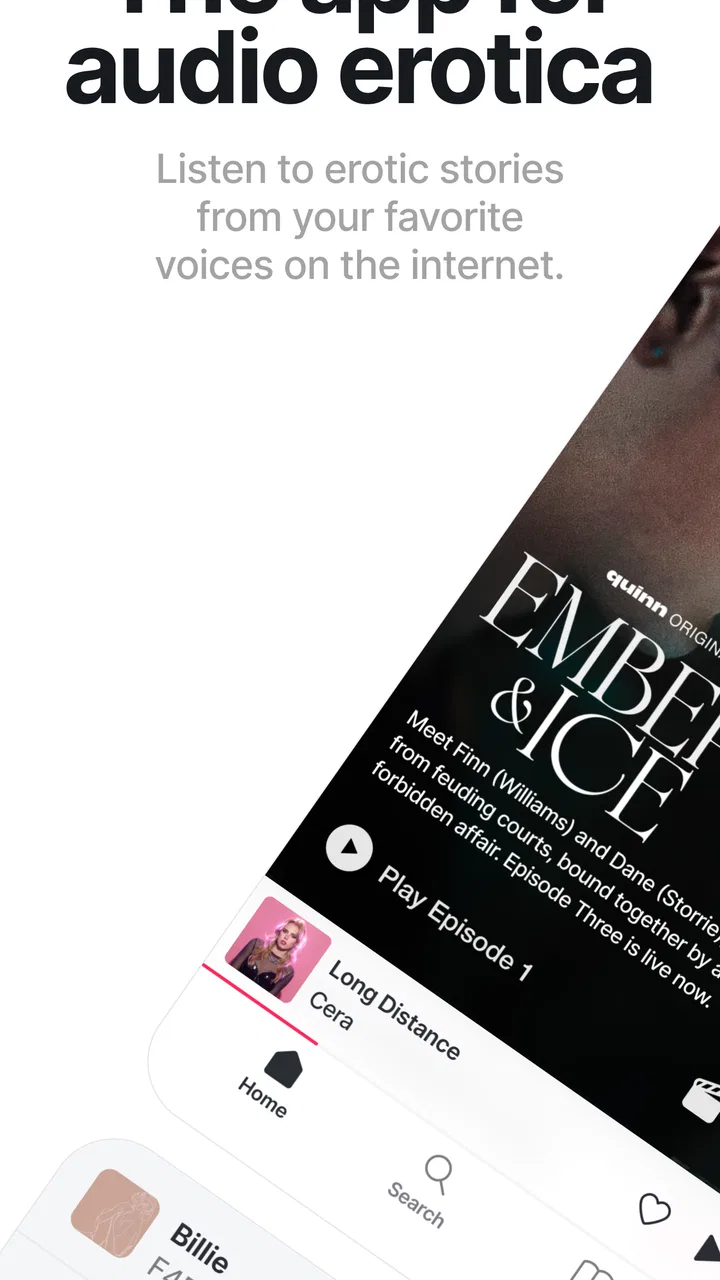
Quinn - Audio Stories is an audio-focused entertainment app featuring intimate, romantic, and sensual stories performed by professional voice actors. Instead of relying on visual content, it uses narration, dialogue, sound design, and atmosphere to create immersive listening experiences. The app is designed for private listening during quiet moments, while relaxing, or whenever you want story-based audio entertainment.
02Is Quinn - Audio Stories free to download and use?
Quinn can generally be downloaded for free, but access to its complete library may depend on the current subscription model, premium membership, or individual content availability. Some stories or episodes may be accessible without payment, while others can require a subscription or purchase. Before downloading, review the in-app pricing, renewal terms, and trial conditions because these may change by platform or region.
03What type of content can I find in Quinn?
The app focuses on mature audio fiction, including romantic, erotic, LGBTQ+, and relationship-centered stories. Content can vary in tone, length, and intensity, with some episodes emphasizing emotional storytelling and others offering more explicitly sensual themes. Because the catalog is intended for adults, users should check the age rating and content descriptions before listening, particularly when sharing a device.
04Does Quinn require an internet connection?
An internet connection is normally needed to browse the catalog, stream stories, sign in, and synchronize account or subscription information. Depending on the version of the app and the specific title, selected episodes may also be available for offline listening after they have been downloaded. Storage requirements and offline access rules can vary, so it is worth checking each story’s download option before traveling or listening without mobile data.
05Is Quinn suitable for children or shared devices?
No. Quinn is intended for mature audiences because its library may include sexual themes, explicit language, and adult relationship content. It should not be treated as a children’s entertainment app. If the application is installed on a shared phone or tablet, use the device’s privacy and parental-control features, avoid leaving the app open, and remember that listening history or notifications could reveal sensitive information.
Pros
- Immersive audio stories make listening feel intimate and engaging.
- Wide range of romantic and erotic narratives for different tastes.
- Convenient for relaxing
- commuting
- or listening before bed.
- Hands-free format lets you enjoy stories without looking at a screen.
- Regularly updated content can keep the library feeling fresh.
Cons
- Many stories require a paid subscription or individual purchase.
- Content is intended for mature audiences and may not suit everyone.
- Story quality and narration can vary between different episodes.
- Streaming may use considerable mobile data without Wi-Fi.
- Limited appeal if you prefer visual content or interactive gameplay.

Quinn - Audio Stories
Gallery